Who we are
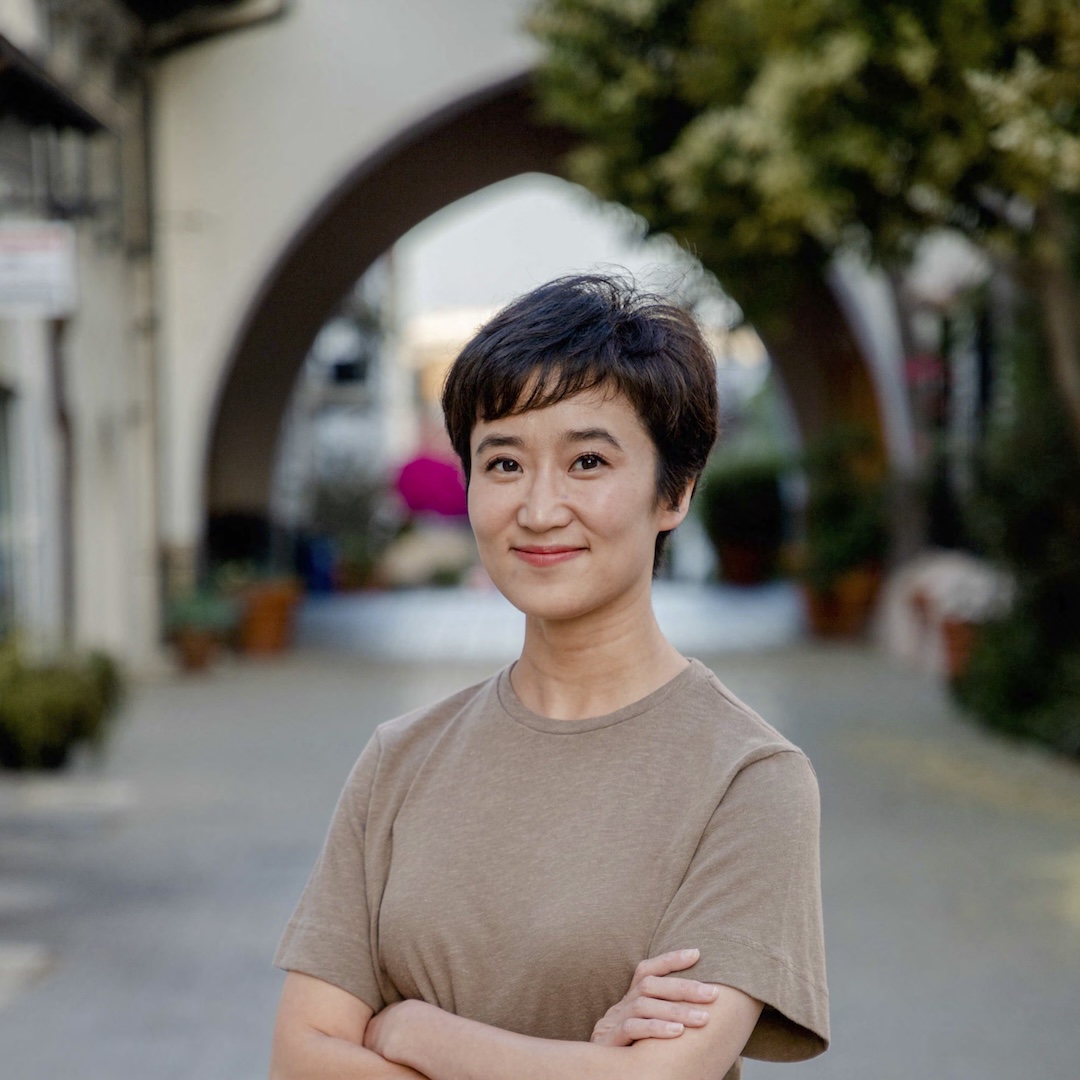
The Wang Lab is a research group in the Department of Chemistry and Biochemistry at California State University, East Bay, led by Xiaoling Wang, an Assistant Professor at East Bay. She earned her Ph.D. at Virginia Tech and completed postdoctoral work at the National High Magnetic Field Laboratory and the University of California, Santa Barbara.
What we study
Our core research uses magnetic resonance to understand how emergent electronic order and magnetism develop in correlated quantum materials, with a current emphasis on kagome systems. We investigate:
- density waves, nematicity, and superconductivity in kagome metals
- f-electron magnetism in rare-earth kagome intermetallics
- frustrated spin physics in conductive metal-organic-frameworks
How we do it
We use magnetic resonance to obtain site-specific views of correlated electrons and their coupling to the lattice. Our core toolkit combines orientation resolved nuclear magnetic resonance (NMR) and nuclear quadrupole resonance (NQR) with multi-frequency electron magnetic resonance (EMR) measurements that help separate electronic and lattice contributions. We also draw on expertise in dynamic nuclear polarization (DNP) as a platform for future method development.
Research partners
Our program is strengthened by close research partnerships and shared facility access, including high-field experiments at the National High Magnetic Field Laboratory and the University of California, Los Angeles, as well as collaborations with colleagues at Oak Ridge National Laboratory and Sandia National Laboratories.
Support
Wang’s research program is supported by a U.S. Department of Energy research award (DESC0025712).